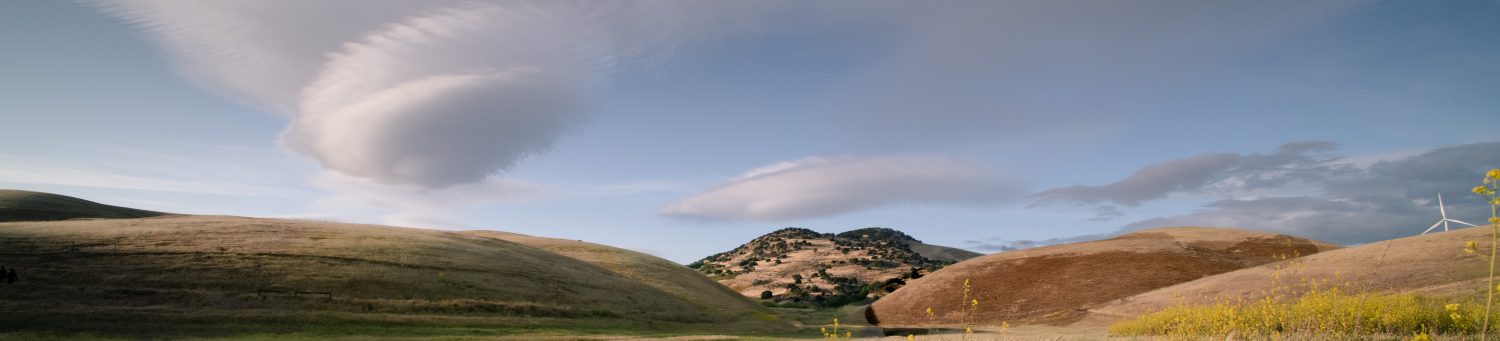

Many things in this story recognize the significance in the number three. Leaving aside its relevance to popular culture, numerology, the church, or even alchemy, Murrieta and his gang of vaqueros had a specific attraction to the #. Latta, in his book, Joaquin Murrieta and his Horse Gangs, talks at length about it. The brand they used, Las Tres Piedras, for example, and how, as a means of a simple handshake, or a signal to discretely telegraph an ally, in a crowded bar, or three fingers on the brow of your hat, for example, or if there was a message to be given, or some urgency in the form of a warning, a cowboy might place his thumb in his belt and dangle three fingers over his pocket. Place names reference the number 3, and as I’m driving through the pass, just north of the Angeles Forrest, off the138, looking out at the San Emigdio Mountains, I pass a little town called Neenach, that has a little school with the same name, and just past that is a sign that says, Three Points, and I wonder. We’re passing through the land of the Tejon, which means badger, a name given two hundred years ago by the white man to some of the earliest tribes of California. For thousands of years the Kitanemuk roved in bands, all the way to the Tehachapi mountains. About twenty miles to the west is Fort Tejon – indicative of what they did about the Indian troubles – but what intrigues me more than that is the name, Three Points – and the fact that you can drive along dirt roads out here for a half a century and still be driving on a dirt road. I’m not exactly sure what I’m looking for, it’s a familiar tune, and a familiar feeling, sort of like being lost, but never too far away from finding something. I’m not wandering as much as I’m following, searching, maybe, as much for a ‘feeling’ as for an answer. The Tejon were a fierce breed, and when Murrieta made the mistake of stealing their horses they tracked him down, along with his gang, and forced them to surrender, not just the horses, but everything they owned, right down to the buttons on their trousers. This account, printed in the Alta California, during the General Bean assassination trial in 1852, according to Reyes Feliz, Murrieta’s brother-in- law, who was interrogated, then gave a deposition, that he was let go in the brambles butt naked. After the trial he was hung, not for Bean, but for confessing to another crime, such was his miserable fate. I’ll save that one for another time, the assignation of Bean is chalk full of California intrigue right out of Zorro and I don’t want to deviate from the chief, who stripped them and set them afoot in the brambles, where Reyes was then mauled by a Grizzly bear and left for dead, somehow managing to crawl halfway back to the mission at San Gabriel, where he was remanded, only to be hung, such was his fate My curiosity at this impasse, just outside of the town called Neenach, isn’t General Bean, or even the name of this place – although it is an unusual one, and I would hope to remember it, if ever I should put use to it in the future – is up the incline following this fertile crescent that makes its way into the forest, and how far is the town of Three Points? Or, is it even a town? The light on the hillside is much as it was the day Murrieta rode on the firm back of Mozo to see his lover Anna Benitiz the week before General Bean was murdered, in 1852, and when he returned from San Gabriel, what trails did he ride on, on his way to the Monte tables along Tulare Lake?
 imagicos