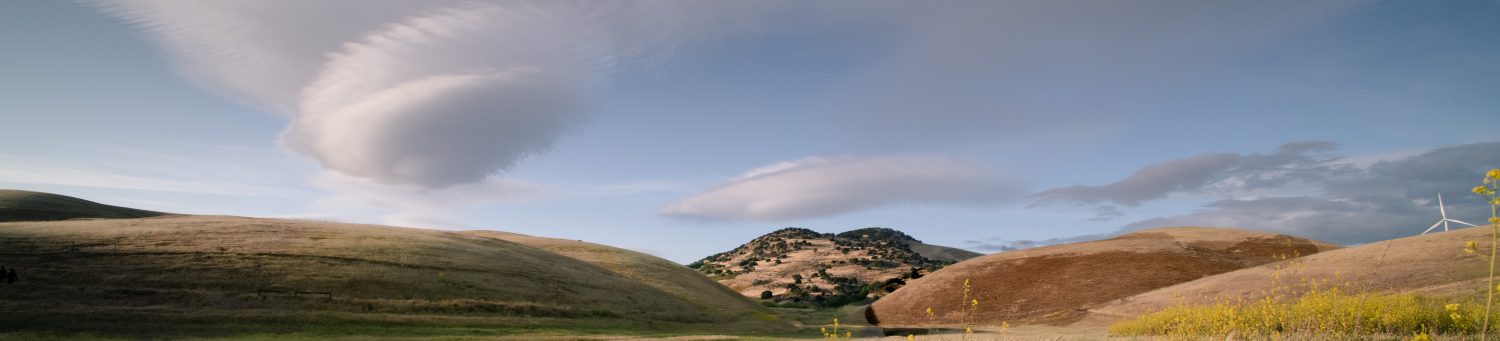
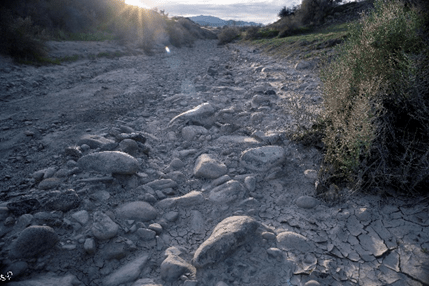
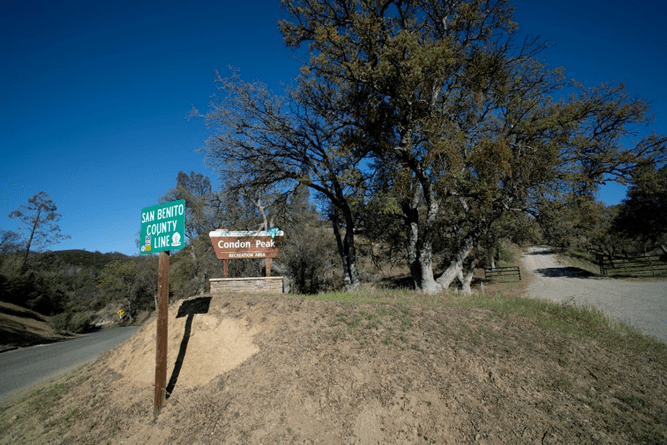
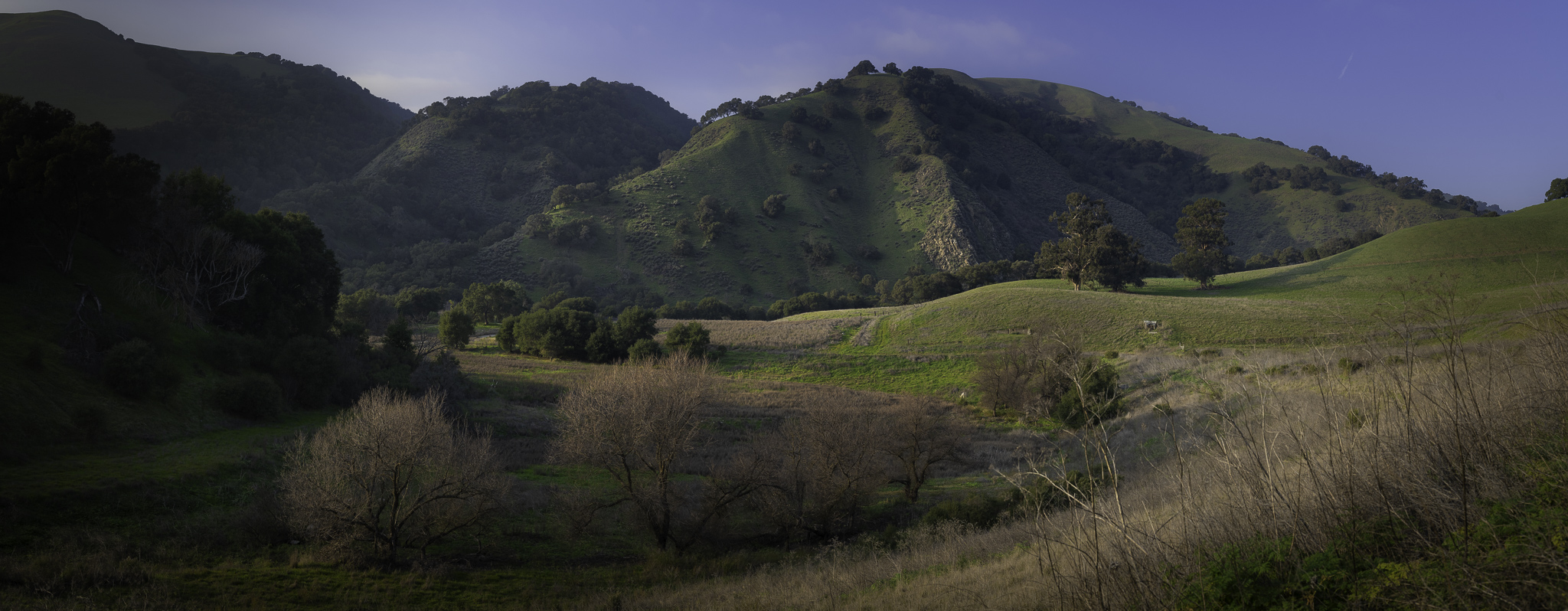
La Vereda del Monte – Shadows along the trail much the way Murrieta would have seen them from the back of his California sorrel – following Clear Creek on BLM land back in May. I haven’t finished the story, nor reached the the rocks where Murrieta had his hideout and made his last meal with his gang of horse thieves, deep in the San Benito badlands, before Captain Harry Love hunted him down and stuck his head in a jar
Rolling up smoke, rubbing the grog out of their eyes.
Coming in from the rising sun – a part of tale that sounds romantic enough, but as with much of the Murrieta mythology, is dispelled by Latta, pointing out the geographical unlikelihood. It is more probable that they were dozing on watch and Love and Company got the drop and woke them with the barrel end of a six shooter. By accounts, they were then tied to a tree, where, if they didn’t see, they certainly heard, the gun battle below at Cantua Creek. Approaching the campfire, Lieutenant Connor notes in his report that Tres Dedos is seen putting something in the coffee grinds, presumably a bag of gold, and is gunned down with seven balls, and then the rest of the shooting begins. This has always been a point of interest to me, coming from accounts later scribed in reports (both Love’s and Connor’s), for Murrieta’s trove, one that every one of the Rangers were aware of, and no doubt had designs upon, was a half a ton in nuggets, and the dust recovered in the bottom of the overturned coffee pot was worth less than the price of one California Mustang. And yet, it is turned in, as perhaps some means of justification for the raid. This should not surprise one, for if one was after a pile of already stolen money, you are not going to admit to even knowing of its existence, let alone, reporting the find, however, to bring the attention to the concealing of gold, throws the whole issue up to speculation, as if to say: see, we could have easily kept this a secret and kept the gold, but we didn’t, as if in a way defending their integrity against accusation – I will take up the fate of Joaquin’s treasure, as it is of central importance to the story, in another post.
To continue with the ill fated Ochovo and Lopez, Antonio Lopez was older and of harder constitution, it was Ochovo who started talking, according to Latta, almost as soon as he was apprehended. The both of them, along with the infamous head and dismembered hand, were escorted by Col Henderson, first to Stockton, and then to Benicia, where Ochovo was thrown in jail. Lopez, on the other hand, didn’t make it that far. He became a casualty in the swamps of Tulare. As the party traversed around lake, he drowns, apparently overturning on the back of his horse, like a boat keeling over. This is about as unlikely a scenario as one could come up with. The manner in which he was tied, similar to the way the sheriff would tie up a drunk to keep him from falling out of the saddle as he’s carted off to jail, by hog tying the feet under the belly of the horse, is believable, but how this led to his death, ironically, does not hold water. The problem here is that Lopez is as skilled as any of these vaqueros, and he wasn’t drunk, Latta states he was athletic in demeanor, and to remain overturned, in a swamp, for the length of time it would take to drown, raises problems. The way Avelano Martinez tells it, (interviewed by Latta), Lopez would sooner die than be interrogated, He knew that in the end, the result would be a noose, regardless. There are other possibilities. Ochovo spilled the beans, why? it must have been under coercion, or other persuasive means. Lopez was of no use to the Rangers, because he knew when to shut up, and was probably defiant in character. If, as the account states, he accidently drowned, the question then becomes, ‘how did that happen on your watch?’ At minimum, he was not a closely guarded prisoner, wandering around in the Tulare Slough, then overturning somehow and held under water. Where there screams as he struggled for air? And what happened to the horse? Bottom line, Lopez drowns under questionable circumstances, leaving Ochovo, who is already running at the mouth, shackled in irons, at times to Henderson, and let to the jail in Benicia. The night they arrive, according to newspaper sources, it is decided to move him to Martinez, for his own safety. For those not apprised of the geography, Martinez is across the Carquinez Straight from Benicia, and no small undertaking to row the prisoner across, so there must have been a well-founded reason. My question is, where does Henderson get his information? The ‘intel’ must have been credible, or they wouldn’t have taken the trouble to move him. Despite the move, the threat is made good the following night, by a gang, presumably Murrieta’s allies, who strung him up from the nearest oak, until his knees were knocking and his tongue turning. There are two reason offered, both openly referred to in the news at the time. Simply put: dead men don’t talk. Either revenge for violating the bandit code of silence, or to prevent an incriminating testimony. The blame is placed on Murrieta men, who presumably ran the risk of guilt by association. I will point out that this was by no means ‘paranoia’, as the vigilante action in California was at its notorious high point in 1853. There is another possible explanation, which is pure speculation: Ochovo knew that it wasn’t Murrieta’s head, and sooner or later, a guy who talked so freely would let the cat out of the bag and confirm what Love knew, what Henderson knew, and certainly what Bill Byrnes knew, that Murrieta, at this point, was very much alive. The consequences of such a disclosure would ruin the reputations of all the Rangers, some of the most prominent lawmen in the state. Either way, neither of these two lived to tell, or even pass the age of thirty, in these unlawful times
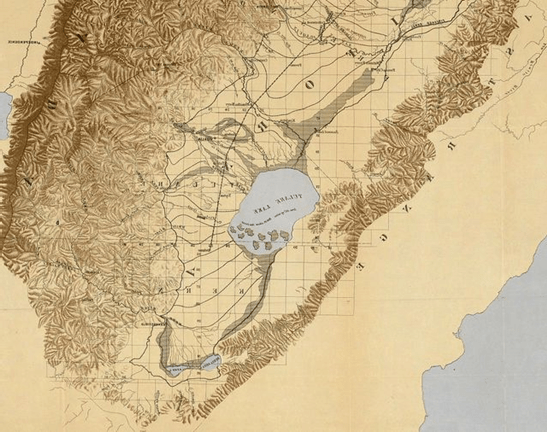
Lake Tulare was once the largest body of water this side of the Mississippi. The outcrop west of coordinates 21, 22 is where Las Tres Piedras is located, Cantua Creek fed into it, as did Kings River from the east. It’s near impossible to imagine what the Valley was like before these waterways were engineered for irrigation, the lake plays a significant role in the story of Murrieta, his horse droving, and the path down the spine of the Diable Ridge (La Vereda del Monte). It is a ‘halfway’ point, where the final herd was gathered before the long haul to Rancho La Berruga, in Sonora, Mexico. A good horse was hard to find in Sonora, and the California Mustang was one of the sturdiest breeds on the planet. According to field interviews conducted by Latta, Murrieta made way more money running horses than thieving gold, certainly more than panning for it.
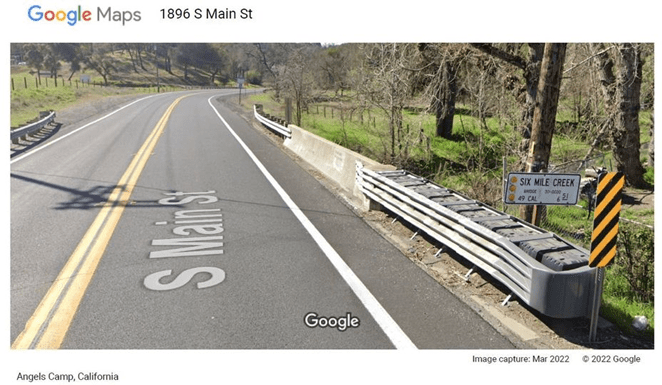
Near as I can figure it, this is Los Muertos, the site where Murrieta dragged to death the miners who assaulted his wife, hung his half brother and whipped him, stealing their claim. The place name doesn’t exist anymore. go figure, but got its name from the killing field Murrieta left behind. This act of revenge is the response of a reasonable man under the influence – his wife raped, brother murdered and livelihood destroyed? what would you do? He hunted them, living in a local cave, and eventually roped all six with his reata, dragging them until dead, all but one, who ran away to Kentucky. I will be exploring this end of the story and the diary of Frank Marshal, who was constable at Angel’s Camp, knew Murrieta, and documents the whole affair.
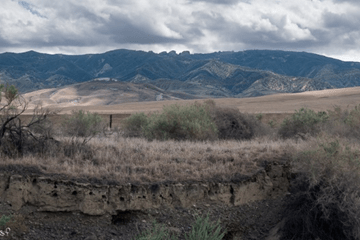
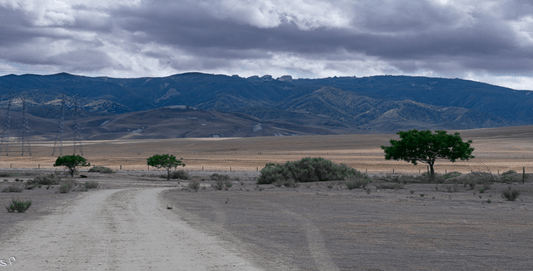
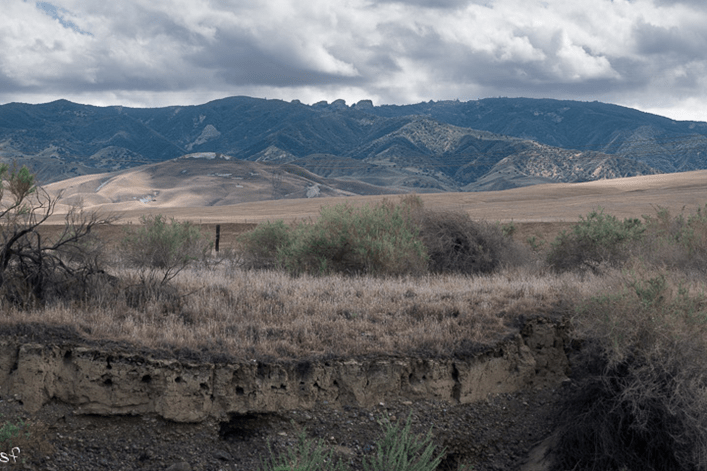
Juan Orejas (Ears) aka: Juan Lopez, got his name for taking the left ear off those he killed; he was a member of the savage Tres Dedos Gang. His cousin, Ojo de Aguila – Eagle Eye (Juan Maria Lopez) was part of Murrieta’s Gang and spent his time with a large spy glass scouring trails. On the day of the ambush at Cantua, he manned the lookout at Las Piedras, seen here, in the distance, looking West from Cantua Creek. It is almost certain Murrieta was there on the day of the ambush, retrieving the fifty horses he and Dedos had secreted, and it is entirely possible he witnessed the gunfight through a looking glass. Coming from the history that Latta compiles, add to that Murrieta’s nature, and is not hard to come this conclusion; he was a gambler by trade, and even though he was being pursued by the most qualified lawmen in the state, who were not only skilled in the arts of the vocation, riding and shooting and the like, they were relentless.
But if Murrieta was going to make this his last drove, he was going to go for broke, just like dealing at the Monte tables. At the Tejon pass, he and Dedos make the fatal decision to return to Cantua for the 50 horses corralled and branded at Tres Piedras. They split from the drove, and Teodoro Valenzuela and Juan Ears head it south along to Sonora, while Dedos and Murrieta return to Cantua. According to Latta, viz a viz Avelano Martinez (Mocho), the day AFTER the gunfight, both Ojo de Aguila, and Murrieta were there helping to bury their compadres. He describes to Latta how they buried the dead in a crude grave by kicking the dirt from the fragile sides down onto the headless bodies of el Chappo – Murrieta’s hostler, and Tres Dedos (mit out 1 hand) and he includes the curious detail that Murrieta, with his head on his shoulders, refuses to help with Dedos. A handless arm sticks up from the dry creek bed.A shiver of dirt falls from above Ojo de Aguila – “We can’t just leave him like that.”
Murrieta looks at the disturbing image without expression, then turns and walks toward a dun colored horse, saying nothing. Ojo looks back at the handless arm protruding from a mound and tugs on it. The one hand body of Three Fingered Jack tumbles into the creek bed; a stubble of dried blood covers the shoulders where once was a head, the buzz of flies swarm in the blazing midmorning sun…
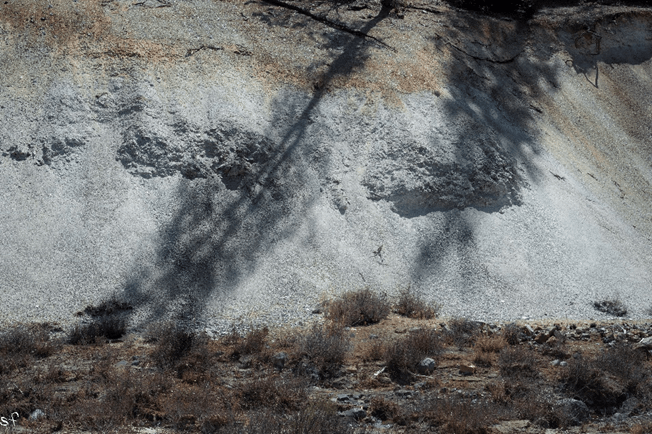
La Vereda del Monte – The walls of Cantua Creek, Tres Piedras in the rearground
In an interview with Captain Harry Love (Leader of the California Rangers,) following Murrieta’s demise at Cantua Latta:
“Harry Love says that Joaquin, at a pinch could have raised two thousand desperados; and he believes that such was the bandit’s purpose, to scour the entire southern country, sack the small settlements, and before a body of troops could be raised announce himself at Sonora. The prisoner he took intimated as much to Captain Love”
The prisoner he refers to is Ochovo, one of two captured alive at Cantua, and transported to Benicia, where he was interrogated and jailed to stand trial – most certainly to be hung – However, he never got the trial, but he did get the noose. While Love met with Governor Bigler to collect the bounty for Murrieta’s head, he was escorted from Benicia to Martinez by Capt Howard after getting a tipoff that his prisoner’s life was in danger. All to no avail, Ochovo was taken the following night from Martinez jail and hung from a local oak tree, no doubt jerking his knees and spoiling himself as he dangled – this was not your typical lynching, common in the era of the Vigilante, he was hung by Mexicans, either to prevent further, disclosure of the gang and their network secrets, or because he was a snitch and already spilled the beans. Either way it’s evidence of the extraordinary reach, and influence of the Murrieta men.
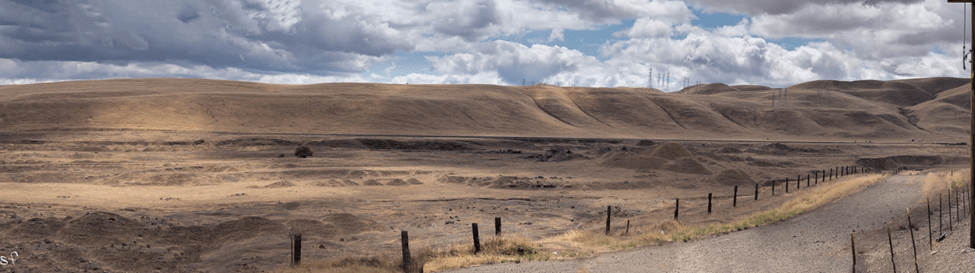
Tres Dedos, the most notorious of Murrieta’s associates, by all accounts a butcher, was a ‘gang’ leader in his own right. Born in the same town as Murrieta, according to Latta, in the same house, joined at the hip, but of completely different character, Dedos was Murrieta’s shadow. Alias, Three Fingered Jack, he rustled horses from the Tulare Lake region, adding them to the drove at Cantua where they were corralled, branded and made ready for the drive south. At Cantua, stolen stock were often mixed with wild mustang and marked with Murrieta’s distinct Las Tres Piedras brand. The image here looks west, into the badlands of the Diablo Range, north of Pacheco Pass.
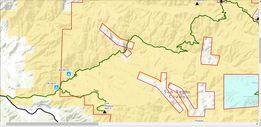
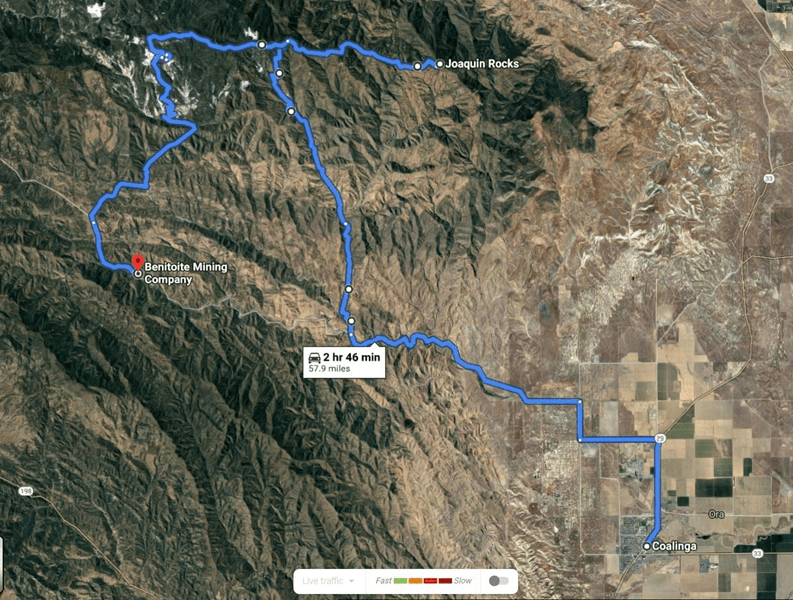
Modified trail – Joaquin Rocks almost adjacent to Cantua Creek, not listed on this map, but to the right, a quick drop to the valley and less than a hour on a good horse. The running gun battle with Harry Love could have started here, The outcrop at Joaquin Rocks is the most formidable in the area, the perfect bandit hideout. This is BLM land, old mining country, open face scars and slag piles, if I dont find Joaquin’s treasure, a concho, or at least a bullet casing, I am sure to get a photo or two. I’ll know more about it, end of the week.
Along the train tracks just outside of Niles you come to the old brick factory, where a hundred years ago the kilns churned out a half a million bricks a month stacking pallets loaded onto railway cars rebuilding the chimneys of San Francisco estates and blast furnaces all over Oakland, after the great earthquake. Fifty years before that, Vallejo owned a flour mill along Alameda Creek, just up the road from where I’m walking. To power his mill, he laid in an aqueduct and siphoned off the swift moving current keeping his 30 foot mill wheel in motion, grinding out flour used to bake bread from Stockton to Los Angeles. I’m on a quest to find the pilings of history, or the ranch house that Murrieta lived in, or at least the fabled ‘Secret Sidewalk’, whichever comes first.
It was the goldminers who flocked up the mountain road in droves and were willing to pay an exorbitant fee for sundries of all sorts, and the course flour the elder Vallejo brother offered was a fair business. In a way, Vallejo Mills, the name of the town, before it became Niles, is in the middle of this tale. I say, in a way, because it is a junction that strikes at the heart, water. Climbing east to the ridge at Sunol Peak, falling 2,000 feet down the Alameda, I can hear it, raging just a hundred yards away, just as Fages heard it three hundred years ago mapping a trail for Anza and offering beads of glass to the native peoples for any information about a moving body of water like this one, pointing to the creek, but much bigger, extending his arms as wide as he could, that snaked behind the great mountain and disappeared into the plains to where the sun rose. Then I come to a causeway between the trees and can see a glint through the scrub. I stop and listen and consider its source. Run off cutting into the canyon as it does along the entire range, standing its course, the creeks, the springs, the arroyos churning through the devil’s mountains; the mountains where Murrieta made his home. To the left and down the valley, nestled between the creek and the canyon, a two bedroom adobe ranch house, several corrals, a few chickens and milk cow. The old brick factory was the location, this much was certain. More sources than just Latta agree on this. The kilns and any remains other than archaeological no longer exist, and of course Joaquin’s ranch house is dust by now, blown into the alluvial wash and carried to the San Francisco bay, or maybe scooped up with the rich clay deposits and turned into a brick. But it was in this valley, that much is certain. That is if you believe Sheriff Broder and his wife, neighbors, and the Sheriff of Alameda County, who attest to knowing Joaquin, Rosa, and his brothers. He knew their story by personal account, and I can’t think of a good reason why a sheriff would lie, not one as forthright as Sheriff Bob Broder. Dragged through a field at Mokelumne Hill, one by one, at the wrong end of a reatta, death came slowly, Broder acknowledges, but he defends Murrieta’s honor and the deeds that took place at Los Muertos. ‘Every one of those miners who abused Rosa got what was coming.’
It’s pure speculation as to where in this photo Murrieta’s house was. Tucked somewhere up the steep canyon walls along the Alameda, Latta claims he leased the land from Jesus Vallejo, the elder brother of the better known General Vallejo, who was granted the land when Mexico succeeded, for service to the King of Spain and just as true as any history is, Murrieta made a home along Alameda Creek and Rosa lived there, cared for by her younger brother Jesus Feliz, who was too young to ride on the droves but like all Murrieta men was an expert horseman and worked as a courier like a pony express rider, carrying correspondence to wherever Murrieta might be on the trail. Much of the time he took care of his sister. This alone is indicative of the impact of the abuse she suffered at Mokelumne. Jesus Feliz, like water, is a lynch pin in this tale. Here, somewhere across the vale was a respite from the horse droves, the adventuring to Marysville, the thieving along the gold trails above Stockton, the gambling in Hornitos. Here, I imagine, he hung out playing guitars, sitting by the smoke wood fire with his family, a band of fugitives, making plans for an extensive enterprise. While the coyotes howled into the frigid mornings along Alameda Creek, they’d plan and organize, some of the more complex details of any business venture: how to migrate 300 mustang, 800 miles, to Sonora, Mexico. The proposition, well beyond the realm of an ordinary business calling, even in times as tumultuous as the California Gold Rush, reflect the unique genius of Joaquin Murrieta.
I walk a little farther down the tracks getting a good stride on from tie to tie. The Western Pacific started grading it in 1862, nearly ten years after his death. It was the final link to the First Transcontinental Railroad and when I look down the tracks in both directions I wonder if the train is still running.
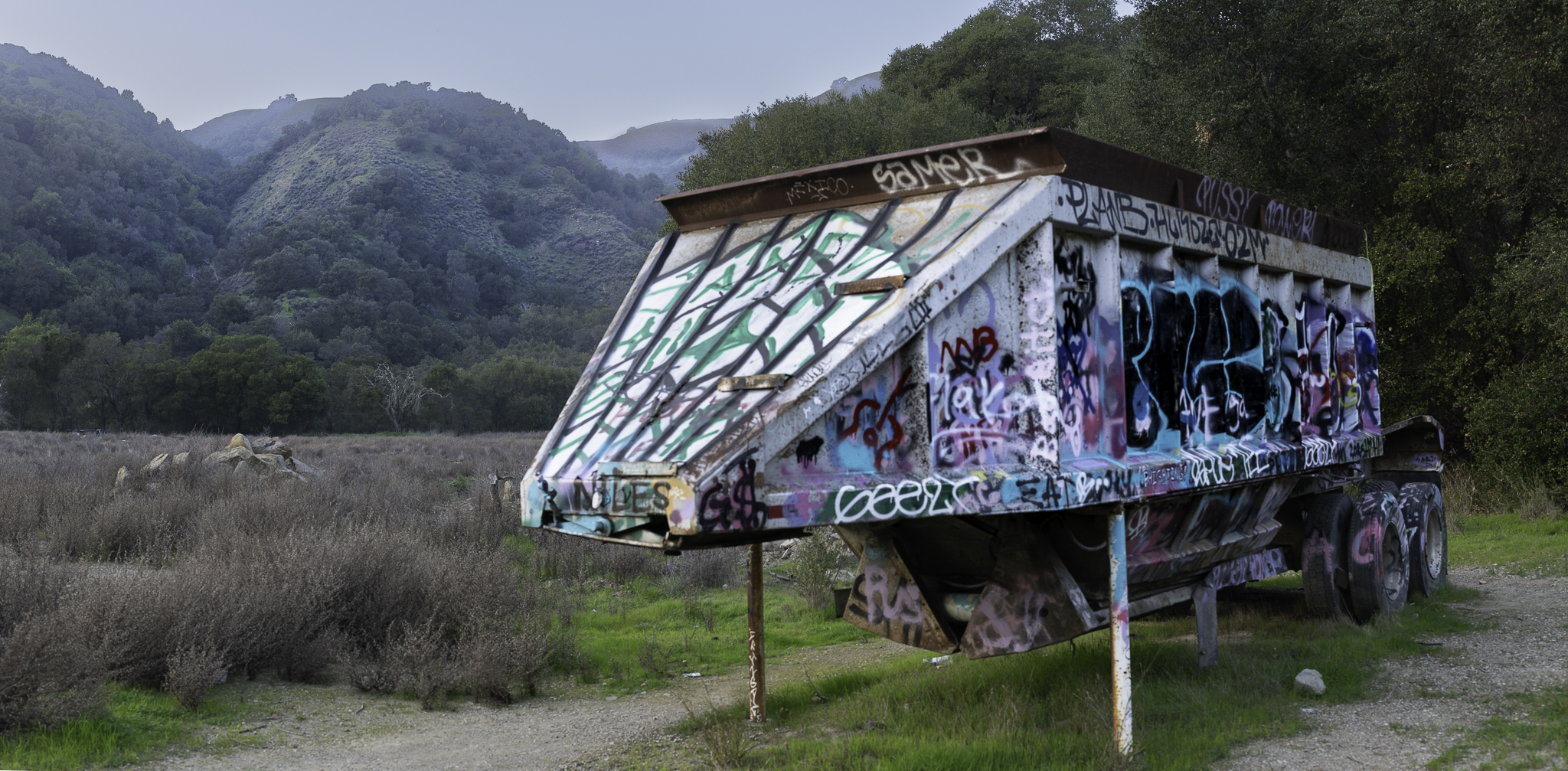
I feel a like a pirate looking for his bones and have just come across Davy Jone’s locker. Not much of photo, but even this trailer-rig has a history, probably in the demolition of the California Pressed Brick factory, built in 1907, with one of its kilns, twenty-five feet tall, once upon a time, standing behind me, just about where I’m standing to frame this picture.
In 1967, Frank Latta was in Niles researching material for what turned into his masterwork, Joaquin Murrieta and his Horse Gangs; he photographed the old brick factory and claims Murrieta’s abode was 400 yards down the creek – in this picture, the creek is just across the field – along the tree line and to the left, toward Vallejo’s Mill. Latta has authority here, he followed the trail of Murrieta for much of his adult life, taking time off his high school teaching career to visit places as far off as Mokelumne Hill, or Sonora, Mexico, dragging his wife and kids along in the 34’ Hudson on some kind of vacation/road trip to interview anyone who had stories to tell. That’s how obsessed he was. His contribution to Murrieta’s study is not only invaluable, but inspirational. However, he didn’t always get it right. Many of his interviews are oral accounts we would call field research – stories told by relatives, cousins, sons of nieces, acquaintances. Verification in some cases is problematic. The way I see it, if a story is told again and again, it is worth listening to. It doesn’t mean that’s it’s true, but that there is a truth in it. What I’m referencing here are the truths that we find in mythology, or its close kin, folklore, often exaggerated, but not spun from whole cloth, and at its heart, a nugget reaches beyond history and encounters conditions and energies that we find in antiquity. These energies have been around for a while, have been repeated and verified. A cursory glance at the grail quest will attest to the relevance of King Arthur, or the historical accuracy of Homer. Perhaps for this reason the truth we find in a myth is more profound than other truths. I’m not sure I want to build the argument any further here, but I do find a myth more interesting than simple facts. Of course, it’s all the more interesting if you can substantiate it. The hilt of Excalibur, found at the bottom of a bog, recently drained to put up a sub-division, in Co. Mayo, Ireland, might have an impact. But finding Murrieta’s bones? I’m not sure what might be awakened by exhuming his bones, but one thing is certain, there is a story here.
You can easily argue that the Murrieta tale is a classic expression of mythology, springing from folklore, much as the fugitive Robin Hood, he captures the fugitive adventurer as an ancient type who resonates across generations. Poems, plays, the endless inspired quest, this is the dimension we embrace when we enter such a realm. If we examine the archetype of Joaquin, we are certainly looking at a character with ‘above average qualities’ whether they be positive attributes, or take a darker course, is up for grabs. He is wounded, a fugitive, a rebel, a fighter, buffeted by circumstances, a leader of men, ill treated by his fellow man, even the fates in the end, cut him short. With the tale of Murrieta, we come to the proverbial question, do the ends justify the means? In this case, does the stealing of two gold mining claims – either one would have made him a wealthy man, the murder of his brother, strung up in front of him, strapped to the very tree, watching his wife, who was his childhood sweetheart, writhe in agony and shame as she tried to resist being raped repeatedly, right in front of his eyes, and raped again, all the while lashed with a rawhide whip until he passed out.
Some of Latta’s interviews have extraordinary insight, others might inspire one to speculate, and still others may be less reliable, but the conjecture that Murrieta lived, after the massacre at Cantua Creek and ended up mortally wounded in Niles, to be buried underneath the house that he leased from Jesus Vallejo, is a provocative one. To find the bones of Joaquin would resolve history, but as I walk over the clay loam fields outside of Niles, just in front of the old brick factory, I’m not so much interested in his bones as I am in understanding Murrieta as a person. His bones may rest, purely as a metaphor, and who knows, maybe in the back of this dumpster. As I raise my head and look at the oak trees around me, the smell of the creek gives off the stank of rotting mud and frogs and clay, and it reminds me of the time my boots got stuck when my grandpa took me duck hunting in the tulles along the levy

 imagicos