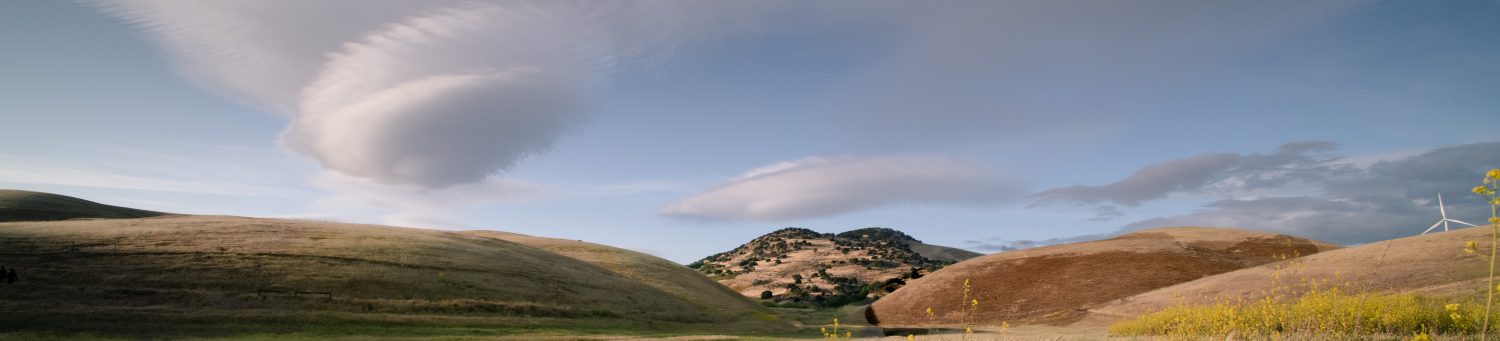

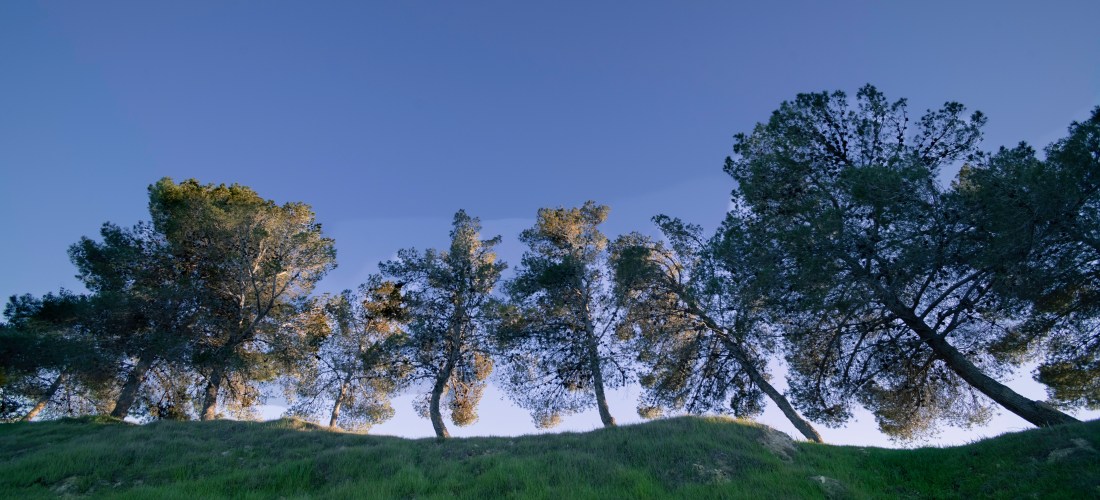
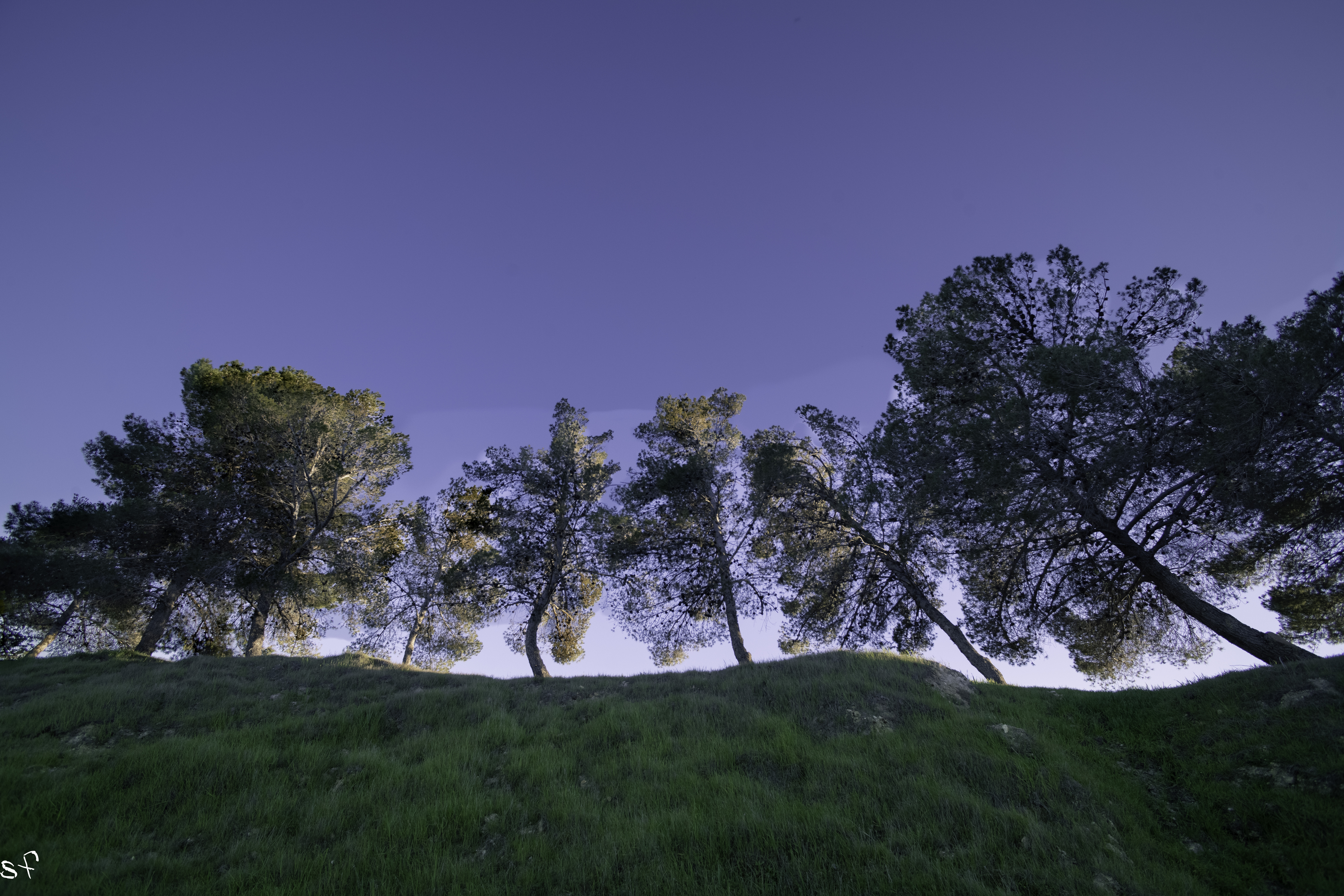
 1Along Camino Diablo on the way to Livermore
Considering the trail from Brentwood to Sonora was 800 miles, and that the drive consisted of 300 animals, the question arises, where did Murrieta corral his horses?
The way of the Mesteñero comes much closer to understanding the complex, historical figure, Joaquin Murrieta, and eventually brings us face to face with the greatest mythology of antiquity, or one of them. Robin Hood is compared to often, but closer in many ways is TE Lawrence or Sir Francis Drake, King Arthur, or Achilles. As far back as there ever was a Gilgamesh, the fugitive warrior, more than any, is the most celebrated archetype in the telling of tales. I am overstating my thesis, to be sure, Joaquin Murrieta was no king, however he was a character with attributes so unique that he embodies something far greater than a dashing figure who ran a gang of cutthroats, in his story is the very stuff of mythology. Every element is present, from irrefutable fact to an exceptional encounter, to the metaphysical – connections of destiny, inexplicable expressions of chance, encounters that compel an extraordinary circumstance into a one of a kind in its archetype and importance. An extraordinary circumstance, involving extraordinary figures, at an extraordinary time, these are the water marks of Murrieta’s tale. We begin, not at the usual place, the one presented in grammar school, the savage bandito hunted down, his head stuck in a jar, we will come to that soon enough, but by a different route, the way of the vaquero, the way of the horseman. This figure itself plays out in California history, not so much as the cowboy, but the Indian, the Californio, an indigenous rider of the wild horse. We begin here because it was Murrieta’s way, the way he was born into.
We must also consider the time. Murrieta came to California for gold and this confluence and what followed shaped the destiny of not only his narrative, but the entire globe. Perhaps even more than the Industrial Age, it was California’s instant and consummate wealth acquired from 1848-1854 that propelled us into the modern world.
Estaciones were stations where Murrieta corralled his horses along La Vereda del Monte – The Mountain Path. As head of a fairly tight syndicate, he was to bring 300 mustang along the southern part of the Diablo range and hand them over to another crew chief, Theodoro Valenzuela, at Cantua Creek. Valenzuela then took the ‘drove’ south through the Tejon Pass, into Arizona, and on to Sonora. There, they were sold for a considerable profit. The Estaciones, are marked by Latta in his book, Joaquin Murrieta and His Horse Gangs, each 30 miles apart, a good days ride, down the backbone of the Diablo Range, over some of the most inaccessible terrain in California. There are 12 stations along this path, some are accessible, some not. All of the stations are at natural enclaves, some have canyon walls as part there perimeter, all of them have access to water. It is important to note that the California horse runner had been in business generations before Murrieta, and some of the stations on La Vereda were used on the older trails coming up from the San Joaquin Valley along the Camino Viejo
Estacion 2 – At Brushy Peak below, Murrieta could see 40 miles in either direction, up the Tesla Grade to the next Estacion, or down the east side of Diablo, Marsh’s Ranch, and any possibility of being followed by the law.
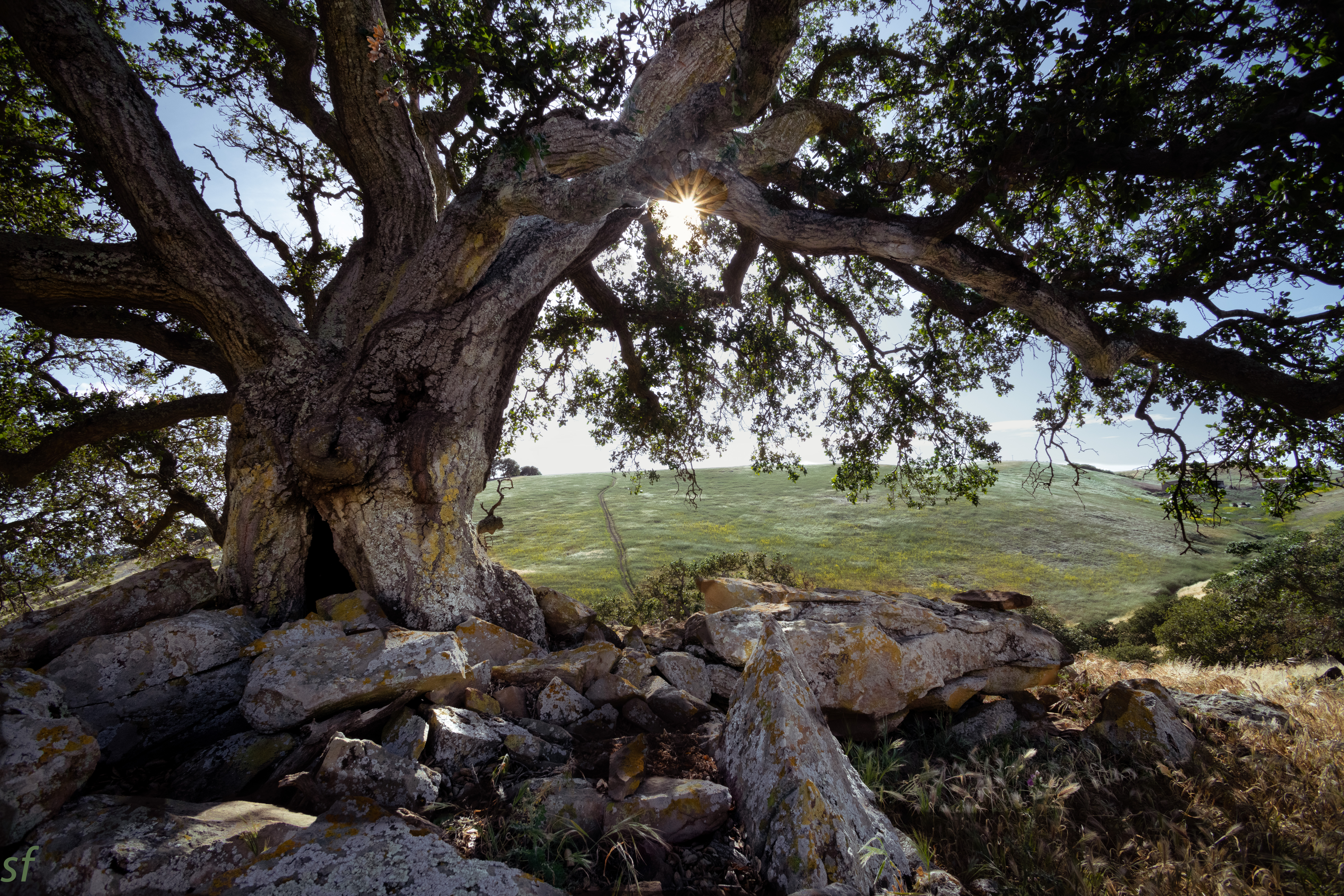
This tree is over a fence and up the slope to the top of Brushy Peak where Murrieta often sat. Ojo de Aguila, Eye of the Eagle was his main reconnaissance. With a fold up telescope, from nearly all of the stations, he could see for miles giving Murrieta time to move the drove to another hideaway in the event that they were pursued.
 imagicos