Jan 29, 22 – Latta – Notes

La Vereda del Monte

Frank Latta, fascinated by the tale of Joaquin Murrieta, spent much of his adult life researching, chronicling, writing letters of inquiry, field interviewing, he was as much an anthropologist as he was a historian. He travels to Murrieta’s place of birth in Sonora, interviews 3rd generation relations, examines church records, birth certificates, gravestones, talking to anyone who might have some memory. Of course everyone does, which is not a strong argument to the veracity of all the accounts, combined with his own enthusiasm, which is that of a romantic, does raise an eye, however, and I cannot over state this, there’s more than enough that’s irrefutable to make it a blistering human saga, at the least it’s enough to hang your spurs on. I understand Latta’s obsession, I too am a romantic, but I also understand his need to verify the story, for the gravity of such a tale is magnified tenfold if it be true. And most of it is, even the popular accounts have a ring to them. In one, the cousin of a cousin’s great grandmother says she heard the story of how Rosa left with Joaquin. Following a letter, sent by Claudio Feliz, who started a claim the year before in the Stanislaus, just after gold was found in 1848, Joaquin shows up at the Feliz ranch to pick up his girl, Rosa. After making a water run to the creek, she’s holding the reins of the family’s old burro, and he says:

“I’m going to California. If you want to come, I’m leaving in the morning.”

She offloads a couple of earthenware jugs filled to the brim, looks him in the eye and says,

”Why wait until morning?”

She’s 15, he’s 16, and the next day they set out on the 800 mile trek. Who knows if the scene played out exactly that way, but that’s how the descendants of Claudio and Rosa Feliz tell it to Latta, a 120 years later. The fact is, Claudio did send a letter, and Rosa was 15, and they rode all the way up to through California from Sonora and ended up at Niles Canyon, and bought a little ranch. All of that is documented. The other amazing discovery in reading Latta was, he doesn’t believe Murrieta was killed by Captain Harry Love, and that the head in the jar wasn’t his. This blows the story up in the breech, and so like all good mythologies, lives on. One fact, and I will revisit this theme later, is that Murrieta was light skinned, blond haired, and blue eyed, and ‘could speak English so well he could pass for an American or even an Englishman. The famous head in a jar, the one destroyed in the fires after the San Francisco earthquake; the head that Captain Harry Love took as bounty, was brown haired, dark eyed, and dark skinned. Anyone who has carefully viewed the Zapruder tapes knows there was more than one gunman, eyes don’t deceive, even if the chopping of his head with a Bowie knife got a little nasty, wouldn’t change the color of his hair.

There are many other incongruities, particularly about Los Tres Piedras – The place where I am headed – Joaquin Rocks, his hideout, at the foot of the San Benito mountain range, where he spent his last night alive, or did he? We will be exploring such questions in some detail coming up, but first I have to get there. I’m dallying, the sun is at my back, it’s a mellow evening, lingering warm, and yellow, and I feel like my body is expanding outward in a full embrace of this mountain path. I am in that twilight place, mainly because I haven’t sleep much, but oddly, I’m not tried at all, and just over the next rise, I’m sure of it, can’t be more than an hour or two
#laveredadelmonte

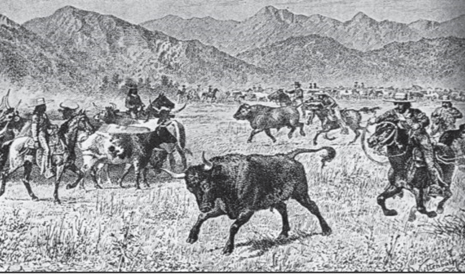
“At slaughtering time, vaqueros would ride through the herds, killing cattle with a knife thrust to the neck, while laborers followed behind skinning and collecting the hides and fat. The meat was often left on the carcass to rot or be scavenged after the hides were removed. At least once a year, a rodeo was held to round up cattle, brand the new calves, and herd stock back to its owner’s land. Year-round residence was not necessary to operate a rancho” ccwater. dot com/615/Cultural-History 

Canada de Los Vaqueros – Amador was by his own accounts a ruthless Indian hunter, having made many forays into the San Joaquin Valley to brutally punish horse raiders
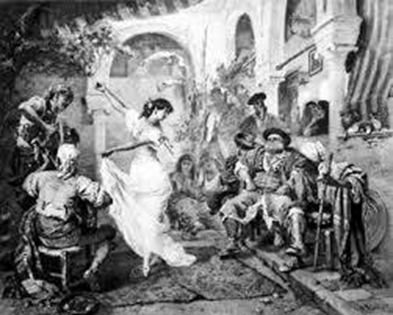
“The lifestyle that went with ranching—based on “the tendency of Latin Americans to make pleasure the chief end of work”—was especially strong in Mexican California, finding expression in formalized and communal holidays as well as almost daily, spontaneous outbursts of guitar playing, cockfights, dancing, and horse racing.”
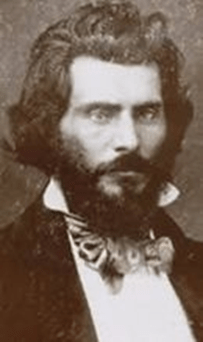
John Rollin Ridge, Author of The Life and Adventures of Joaquin Murieta: The Celebrated California Bandit
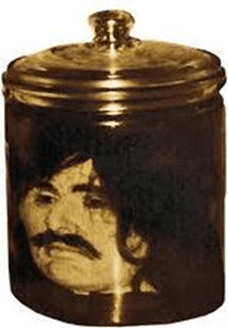
All of this leads to Joaquin Murrieta, the Vascoe Caves, and the stolen horses he drove up from Mexico, through the badlands, and into to Contra Costa

The head of Joaquin Murrieta, a tale dear to my heart. Zoro, comes from the legend, and of course Robin Hood , the outlaw, a fugitive from justice who serves the course of justice in doing so. Great character. We open with this image and a voice, offscreen who laughs and then says, “it’s worth it, a dollar to see my own head in a jar…” The character- who we never see- begins to tell his story, and off we go, the ranchos, Felipe Briones, the hideout at the Vasco Caves, the hotel on Mt Diablo, called the Mt House, and of course Kate Nevins, a radical woman, quite outspoken, who lived on the delta in socialist commune at the turn of the century. If Joaquin lived, he had a different story to tell. I think I will take a few creative liberties on this one.
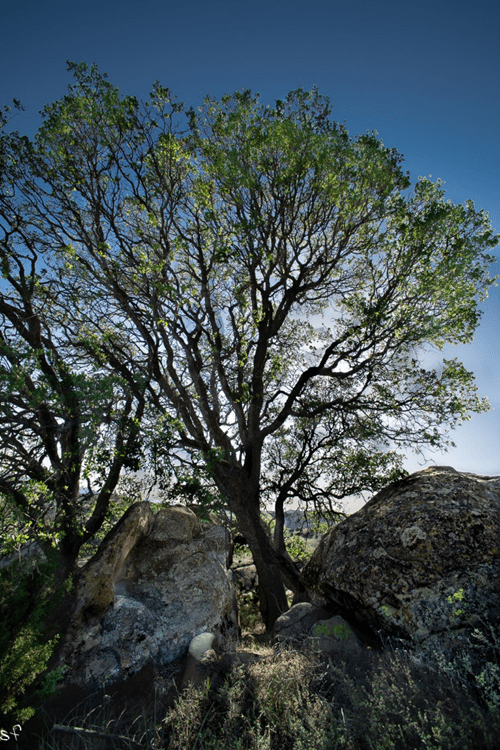
San Benito 69 – A Drove of Horses – May 21

La Vereda del Monte

The running of wild horses began before Murrieta’s time, when California was still part of Mexico and the culture of the vaquero reached a level of horsemanship only paralleled by the bowmen of Genghis Khan, or the Nez Perce of Chief Joseph. It is indigenous in the same way I am indigenous, and part of the culture that roams through these mountains, like I’m roaming, on my way out to Joaquin Rocks and I find myself slipping in time and a hundred years ago is much the same as it is now, even some of the trails, were the same, give or take. the one over my shoulder, not much different than the trail Joaquin rode over and even before him, every September, after the round-up at Kellog Creek, the horse gangs, would drive herds of wild mustangs south. When Murrieta arrived in California, he started working rounding up mustang, roping and branding, the most beautiful horses he’d ever seen, making them ready for the drive. The California horse could rake in 150 dollars in Sonora, Money could be made, and money and horses were tied to his destiny. He was born in Sonora. By Murrieta’s time, the droves were well organized, with holding stations, called Estaciones marking the trail every 30 miles or so, running through the backbone of the Diablo Range, into the San Joaquin Valley, and over the Tejon Pass. These stations were necessary for several reasons, to keep the herds from perishing, to thin them of unwanted stock, and to acquire new horses as the drove traveled south. Tres Dedos -AKA: Three Fingered Jack, was the crew chief at the Estacion at Cantua Creek and had a gang of his own. Collecting stock from the Tulare Lake area, he bought from local vaqueros, some wild caught, others rustled, adding to the drove to keep the number as close to 300 as they could. This number had been reached over the years and was adhered to professionally – fewer than 300 was not profitable, and more was unmanageable. A drove of 300 horses would start out at 50 or 60 head, picking up stock along with other vaqueros, as it moved south from station to station, always thinning the herd of both the weaker horses and the strong willed ones, often Stallions, too spirited to be herded, These horses were the most problematic, as they were the highest in caliber, yet would lead the others astray and disband the herd. The leaning was done on the move and the unfortunates butchered along the trail. In retrospect, this is seen as quite cruel, but was necessary to keep the herd intact and moving at an able clip. By the time the drove had reached the Tulare Lake region, before the haul over the Tejon, the herd was to stabilize to as close to 300 as possible. Latta insists that the entire operation was run like a business, with employees, timetables, and technique.

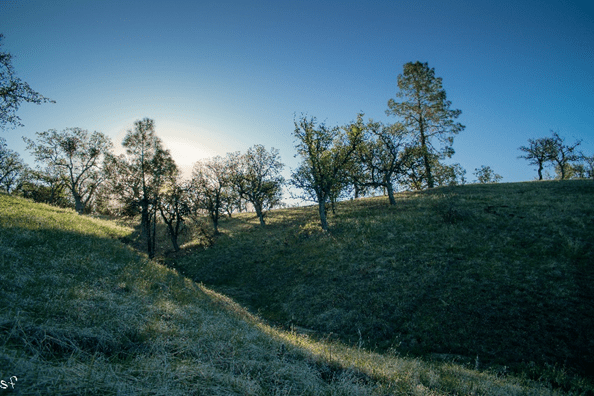
The Three Trees below mark the trail I’m on with sparse groves of surreal black and white oak. I glance over my shoulder, the sun drops lower, I’ve been walking over an hour, although I can’t be sure, there’s no cell phone out here and my only time is the clock back in the car. Normally, I have a good sense of it, but I’m beginning to feel the weight of the afternoon telling me that my body isn’t what it used to be, back when missing a night’s sleep was the beginning of a proper adventure. I’ve been covering some ground and I’m good for more, keeping in mind that wherever I end up is my halfway point and the rocks are still nowhere in sight. Now I’m kicking myself for not asking Ranger Tom more questions like: what do you mean by “the long end of 3 miles”? Or are there any landmarks to look out for? I’ll give it another half an hour but no more, not unless I want to be walking in the dark.

San Benito Mt  – May 1

La Vereda del Monte

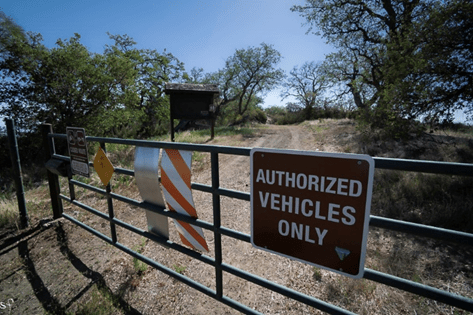
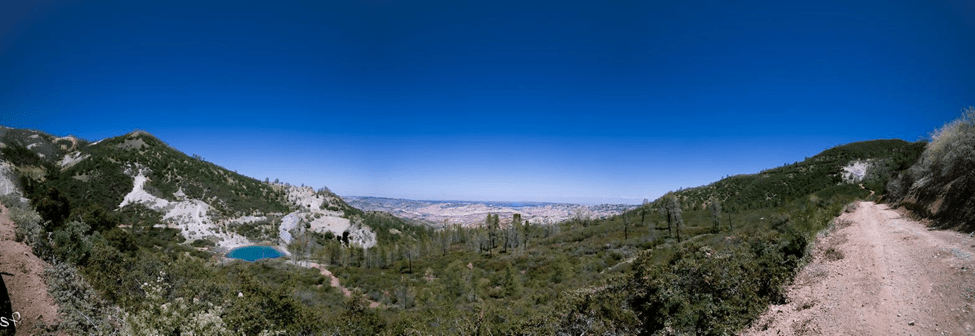
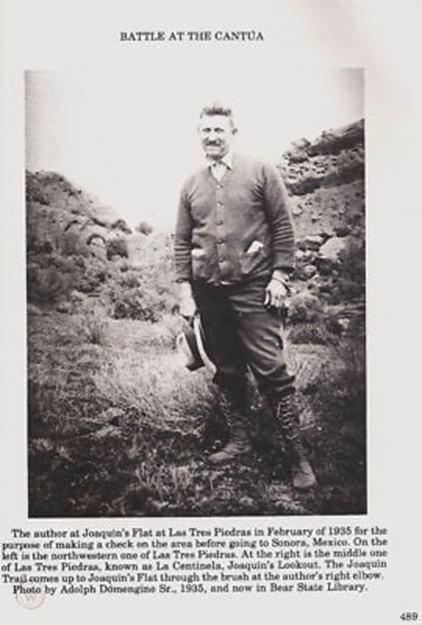
La Vereda del Monte – San Benito Mountain – May 1- Tires on the ole chariot were holding up fine, I was a bit road rattled, driving since early morning in a giant u, up Clear Creek, along Joaquin Ridge, dropping in elevation, heading east, back toward Coalinga. This geography becomes important, as we get into the night, but for now, the sun is still high and just around the corner I come to the gate. No sign saying: Joaquin Rocks thata’ way, no trailhead posted, just a locked gate across the road and a turnout. I sit for a moment on the picnic table to take it all in. At this elevation the landscape had changed, oak knolls and grassy slopes, much like the hills near where I grew up – Briones, and the Berkeley hills are part of the same mountain range to the north, where the Mountain Path begins – and I think about this as I look up the trail and try to imagine Murrieta on his sorrel, driving a herd of 300 wild horses through the some of the most remote parts of California, ending up here, probably under the very tree I’m leaning against.

Ranger Tom said it was a good 3 miles to the rocks from the gate, although he wasn’t too exact. There was 3 hrs of light left, give or take, so I decided to go for it. I cooked up a quick coffee on the single burner, hydrated a half quart of water, and downed some boiled eggs, 6 miles, I’d be back by dark, and if if I was on the trail after sundown, no worries, it looked like a good road, what could happen? I packed light, only my camera and a pocket full of trail mix – I was about to find out.

Jan 26, 22 – Los Gatos Highway

La Vereda del Monte

La Vereda del Monte – Readings from Frank Latta’s book- Joaquin Murrieta and his Horse Gangs –

The trail begins northeast of Mt Diablo, at the rodeo grounds near Kellog Creek, and runs along the Diablo range all the way to Sonora, Mexico. According to Latta – ‘Murrieta and his horse gangs and to nearly all Californios…this became known as La Vereda del Monte, the mountain trail…over which Murrieta and his horse gangs hazed more than 8,000 horses, over 800 miles to their secret rancho in Old Mexico’

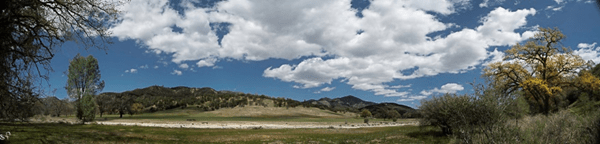
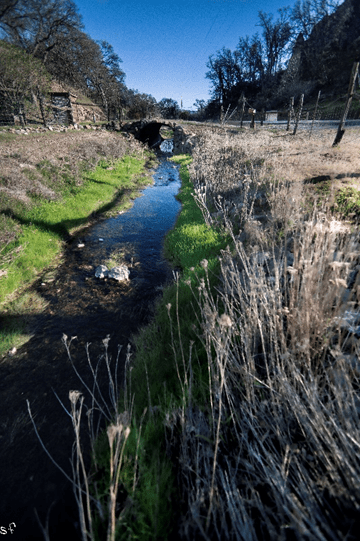
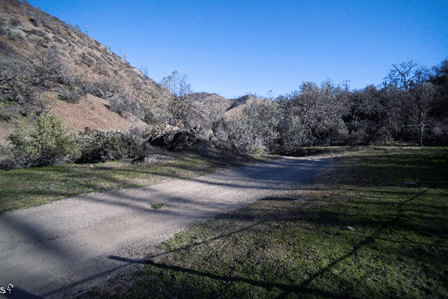
The photo below is along Los Gatos Creek, following the San Benito Mts where Murrieta had his ‘hideout’, Joaquin Rocks – in reality it was one of a series of staging grounds, or Esatciones, used to corral the horses before continuing east to Tulare Lake, then through the Tejon Pass.

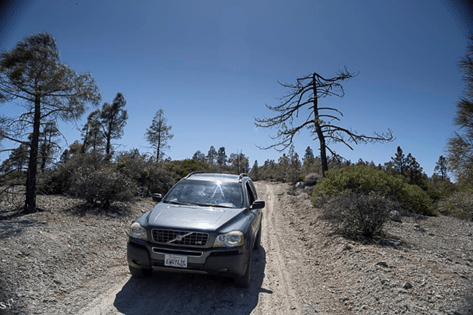
I was unsuccessful in finding a back road up to the rocks, which is about five miles straight off the highway. Instead I had to take a much longer route, a few weeks later, after getting a permit to cross BLM land

June 14, 21 – Mendota Pool

La Vereda del Monte

There are many paths – muchas veredas por la veritas.
Murrieta followed the water. Mendota Pool is below me, where the fishes dance and the ridge above me circles back to the east, and my jaw drops like a gaping yawn for I am stunned by the beauty. The constant hum of the tires on a gravelly road with a flick of my wrist I go round the pointy rocks and the edge of the passing trees vibrate resting on a lone pine silhouetted in the laminating sun.

The immeasurable breath and all around me Joaquin, the dialectics of alchemy, and the polar fusion of carbons reducing matter to its essence, are everywhere. I am.

Have I lost you yet? I am losing myself as I get closer to where I will find the answer, or maybe one, that would be enough. First, I am going down to the pool, and look to see if I can spy on a goddess bathing with the goldfish and not get chased by the hounds. hope to see you there.

June 13, 2021

La Vereda del Monte

The afternoon is melting and along with it I disappear into the landscape slowly climbing up the incline to the ridge where Joaquin once rode at midnight with Ana Benitez dressed as a man and Three Fingered Jack, his longtime associate and partner in crime, to Tulare Lake and the gambling tents and the Maramos, which were the rope jumping competitions. I’m getting closer, I can feel it. Ranger Tom has assured me that if my car should get stuck he would be along in a day or two and I have my eyes peeled on the road for all the pointy rocks which takes considerable concentration which is fine except I keep seeing photographs everywhere and stopping and then I’m thinking about goldfish and the hermetic arts and Murrieta and the Monte tables, which is a card game – a different deck than the Tarot, but he dealt his fate all the same, I look out across the Allcades, a dead mountain range that not even horse thieves would venture, and try and make a connection, and there it is right in front of me, only you can’t see it any more. Once you could see it from here, the largest lake in all of California, except maybe Lake Tahoe. It’s where he took Ana Benitiz, dressed like a vaquero to the rambla or maybe just to watch him win at gambling in the tent village with the colorful ribbons, sticking on the poles and the whores and the guitarras, and the travelers in wagons who just came in from Ohio and were headed for them thar hills with a Yankee Doodle Dandy You could see it from here, Lake Tullare , back in his day, And it isn’t because I only had a couple hours of sleep at Oak Flat campground last night, or the puff of weed Ranger Tom busted me for, it’s the light, it seeps in everywhere, the corners of my eyes, a scintilla, a demon, a voice from antiquity.

Jan 10, 22 – Alcalde Hills

La Vereda del Monte

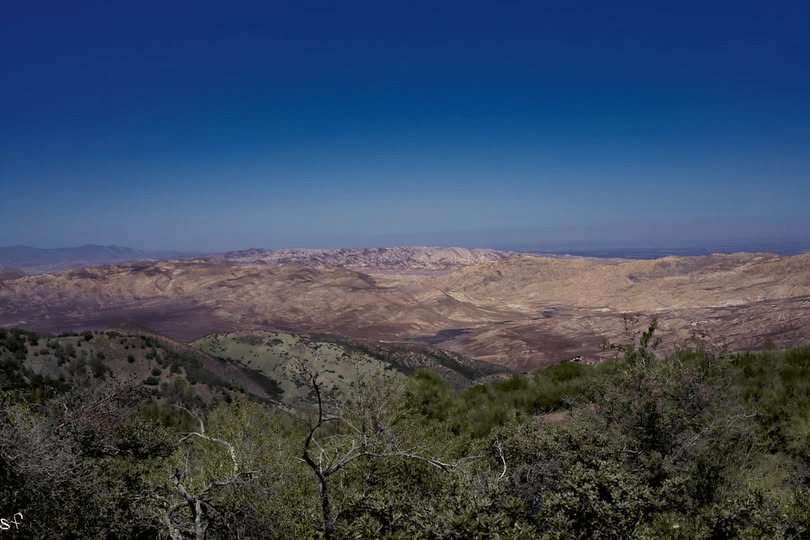
San Benito Mountain – From last May, a couple of hours after this I come to the campground and there is just enough light to make the 3+ mile hike into Joaquin Rocks. As you recall, I haven’t slept in a couple of days and when I almost ran into Ranger Tom coming around the bend, he raised his eyebrows, looked down at my tires and said::”‘it’s the rocks that you have to watch out for, punch right through those sidewalls.” I had my eye out, even before Ranger Tom, but now I have both of em pealed, even tho it’s hard not to be distracted by such austere beauty, Then I remember why I’m out here and try and imagine what it might have been like a hundred and fifty years ago, riding with Joaquin and his gang of horse thieves – La Vereda

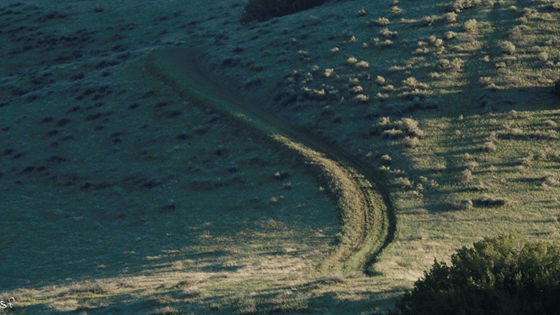
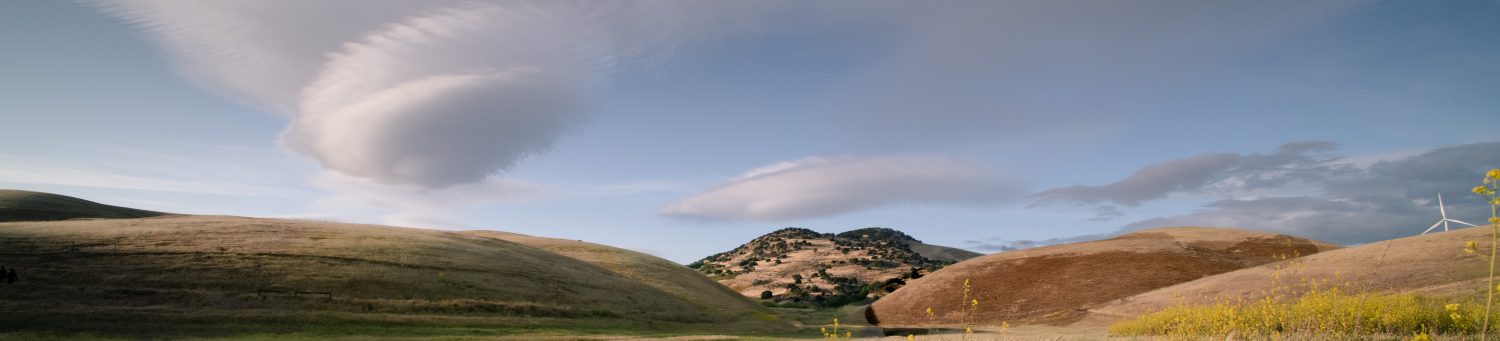
La Vereda – Looking east toward the Alcalde Hills and what once was Tulare Lake. Even now there are ghosts out there, like vibrations wanting to be seen. I’m about an hour from the campground, but I’m so transposed that I’m not thinking about how far, or the sun going down, or anything, really, except how Murrieta learned the game of Monte and played it in the tent cities along the Lake, in gambling dens, where he’d share his money, much of it stolen, all of it squandered freely with the gypsy culture of Californios that lived along the marsh banks. And on his way there, a days ride out, he’d take in this very view, riding along the ridge, his heart racing and he’d tap his Sorrel mare on the ribs and all of them would give a ‘Yaa-hoo Oye Oye, whistling and maybe even breaking into a song. There were women waiting, and good whiskey, and serious money to be made at the tables, They’d spend the night at the rocks before going down and take a bath in the spring, and make sure the herd was well corralled for the night. I’m hoping it isn’t too long, I figure if I make it in the next hour, I’m going for it – Joaquin Rocks – La Vereda del Monte.

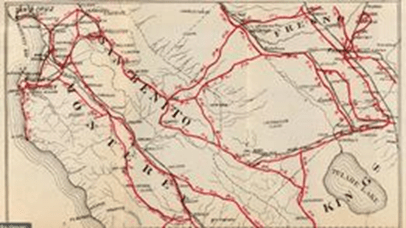
Murrieta’s stomping grounds, 1896 – Recall at 16 he rode up from Sonora, passing though Tulare Lake and ending in Niles Canyon, where he had a house with his lover/wife Rosa Feliz, sister of Claudio, who had a claim in the gold fields of the Sierras. From William Mero’s article, cocohistory.org/essays-murrieta.html

‘The young Joaquin eventually married Rosa Feliz of Vayoreca. They, along with Jesus Murrieta and Rosa’s three brothers, went to California upon news of the gold strike. Rosa’s brother, Claudio Feliz, began gold mining with Anglo partners near Sonora while Joaquin and his bride eventually moved to Niles Canyon, then part of Contra Costa County. In these early years there is evidence that Joaquin worked as a vaquero near Oakley and Brentwood in 1850 and as a mestenero (mustang catcher) – La Vereda

Feb 27, 22 Cantua

La Vereda del Monte

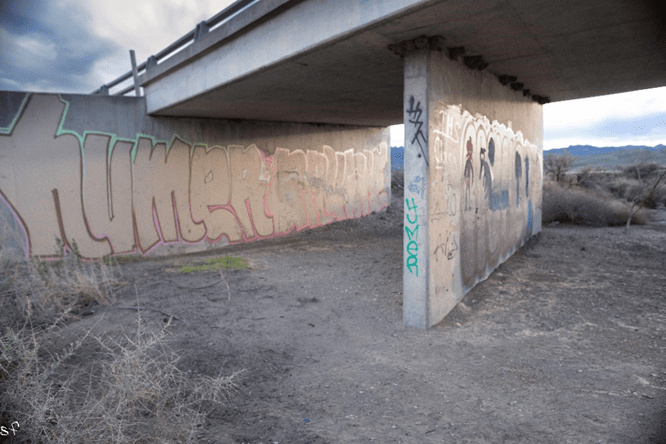
Cantua Creek, past Coalinga, just off the 5. This is in the vicinity of Estacion Cantua, the final station on La Vereda, where Pedro Gonzales, one of the youngest of Murrieta’s vaqueros, and known by all to be the finest horseman, was station chief. At Cantua, they fattened the herd to as close to three hundred as possible. This was the maximum amount of horse stock that could be profitably driven to Sonora, a conclusion come to by fifty plus years of horse droving (before Murrieta’s time). It was close to here where Captain Harry Love set his ambush and took the hand of Manuel Duarte, aka Tres Dedos – Three Fingered Jack, as he is infamously known, was of no relation to Murrieta, but according to Latta, was born in the same room, along with the Feliz brothers and Murrieta’s wife, Rosa, In all likely hood, the residence of the local midwife in Sonora. The moniker, using three, had significance to Murrieta and his confederates. Three fingers were used as a password, with the thumb tucked in the belt, or grazing across the cheek at the Monte tables, to recognize an ally when the heat was on. The branding iron used by Murrieta, is the three rocks, Tres Piedras, Joaquin’s famous hideout, refereed to numerous times in earlier posts. I will be concluding the tale of my journey to these rocks, soon, for those of you who have been following it. and wondering how it ends. Its distinct shape can be seen just between the two pillars of graffiti, on the horizon.

Feb 21, 22

La Vereda del Monte

The last of Mocho Creek, the last of the afternoon light, up ahead I’ll be taking the junction east, and try and make it home before midnight. A bucket load of questions run through my head, most of them I don’t have answers for. Seeing that dead girl still vibrates around me like a brass gong, my perception is altered, time is tweaked, there’s a taste in my mouth, and thoughts drift in and out at random, almost like in a dream. Inevitably they come back to what I’m out here for, and the biggest question arises, whether Joaquin actually was killed at Cantua Creek, or if he lived, and it is the central question that motivated this entire journey, tryingto get to it, whether or what is true, a fact, verifiable, for it has long been my belief that in all mythology there is fact. So what part of the legend is true? This is a question I will increasingly entertain on the second leg of La Vereda del Monte – where Murrieta has grown his herd to two hundred head, and drives them up the San Antonio Valley toward Mississippi Lake, right down the center and through the most remote parts of the Mt. Diablo range

Feb 21, 22 – Mines Rd

La Vereda del Monte

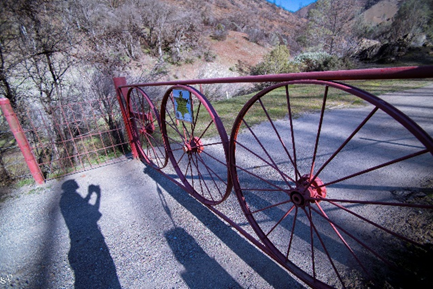
Just about three miles up Mines Rd is the gate with the red wagon wheels. It comes up sudden and there’s no place to turn around. so I keep driving, and just like he said, there’s an incline, and i know later from looking at the map I’m climbing up Horse Thief Canyon, and a few hundred yards further, the road widens and there looks to be a place up ahead, and i can see a couple of dudes in motor cycle jackets standing on the side of the road smoking, and I’m looking for a place to turn around, And then I see up ahead a little further another group of people, some standing in the middle of the road, and I slow down, and it dawns upon me, as I pass crawling by, I can see her, lying in road, almost like a child, staring up in the sky. There are some things that you cannot unsee, and death is one of them, and she was dead, and I passed by without looking again, but I’ve seen death, and she was dead. There was nothing for me to do, I wasn’t a witness, and there were almost twenty people stopped, so I kept driving. And then the thought occurred, what if I wouldn’t have turned around to photograph some horses, maybe I would have run right into it. As it was it was jolt, and now I had to figure out how to get back down, and get a shot of Coyote Creek with a dead person in the road.

The magical glen close to the junction of Coyote and Mocho Creeks, that t don’t have much of a chance to explore. It’s been about ten minutes and I can hear the helicopter take off. Now i have to hoof it back up, pass by the dead girl again, and move my car. I’m getting a work out, and since I don’t like photographing dead people, I’m not getting many photos. But that isn’t what’s important, I realize, and La Vereda del Monte is not something in the past, nor is it about geography, it isn’t about a dead girl, or Joaquin Murrieta, and it isn’t even about the light, it’s an energy that courses through me, and I suspect, all things.